

The Difference Between Back Pain and Sciatica
Have you been told your persistent lower back pain is really sciatica? Did you know specific signs and symptoms can clarify what condition you’re dealing with? Far too often, these terms are used interchangeably or, worse yet, inaccurately. Fortunately, at Total Care Physical Therapy, our skilled physical therapists can clear it up for you and set you on the right path to relief!
Back pain and sciatica can be confusing and even intimidating, especially when you’re not sure what’s causing your discomfort. Whether from a car accident, lifting something heavy, or seemingly out of nowhere, both back pain and sciatica seem to have similar causes and even share some symptoms.
That’s where physical therapy comes in. Physical therapy is highly effective for both conditions. It helps reduce pain, improves mobility, and, most importantly, tackles the underlying issues to prevent future discomfort. With a tailored treatment plan, you can get back to doing what you love, pain-free.

Understanding the Difference Between Back Pain and Sciatica
Back pain and sciatica are sometimes used interchangeably, but they’re not the same. Lower back pain is generally localized, affecting the lumbar region of the spine. It can arise from muscle strains, herniated discs, or prolonged poor posture.
Sciatica, on the other hand, is more specific and involves pain that travels along the sciatic nerve. This nerve starts in the lower back and runs through the hips and buttocks down to each leg. The pain you feel could be shooting, burning, or even tingling, and it usually affects just one side of your body. To be a “true” sciatica,” nerve symptoms must be felt in the leg (specifically below the knee).
Common Causes of Back Pain and Sciatica
- Lower Back Pain: In most cases, lower back pain is caused by factors such as muscle strain, herniated discs, degenerative disc disease, arthritis, and other conditions.
- Sciatica: Most commonly caused by a herniated disc, bone spur where the nerve exits the spine, or narrowing of the spine (spinal stenosis) compressing part of the nerve.
Classic Symptoms of Back Pain and Sciatica
- Lower Back Pain: May include stiffness, muscle spasms, and difficulty in moving.
- Sciatica: Must consist of symptoms along the nerve root in the leg and typically include numbness, tingling, or muscle weakness in the affected leg or foot, in addition to pain.
It’s crucial to know the difference between the two because the treatment approaches differ. For example, sciatica might require attention to nerve compression issues, while lower back pain could be more muscle-related.
So, if you’re tired of enduring persistent pain, take action and call to schedule an appointment with our spine experts. Let us help you understand your condition and guide you toward effective relief.
Exercise of the Month
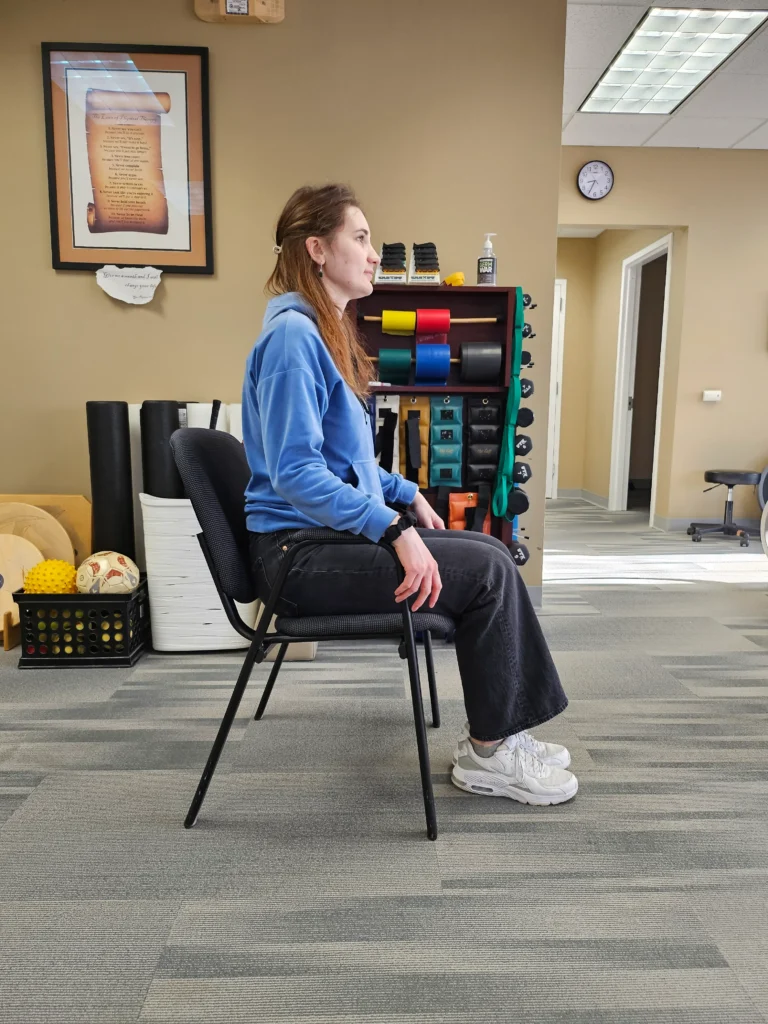
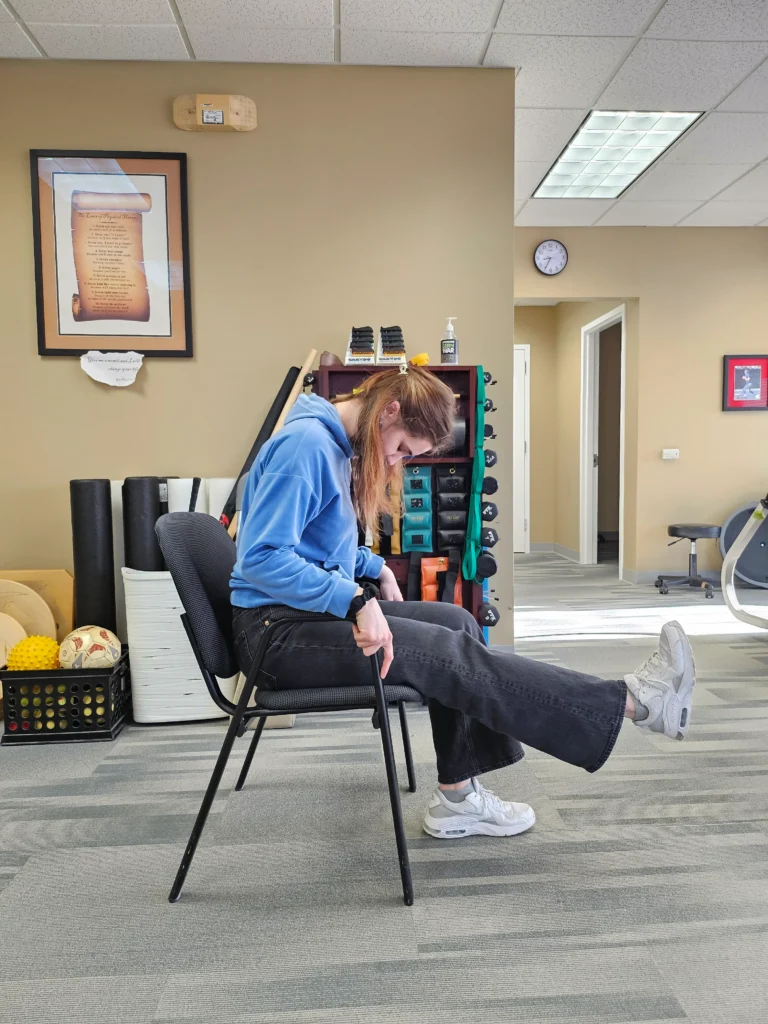
Seated Sciatic Nerve Tensioner
Sit in a chair with one foot flat on the ground and the foot on the side you want to work flexed with your toes pointing towards your face. Lift one lower leg by lightly contracting the upper thigh while simultaneously lowering your head, slowly tucking your chin towards your chest and exhaling. Slowly return to start. 3 Sets, 10 Reps, 0 Hold
Our Approach to Assessment and Treatment at Total Care Physical Therapy
If you are experiencing back pain or sciatica, it’s time to take action. Working with our experienced therapists can help you understand what you are dealing with and, most importantly, how to resolve it once and for all!
Whether you come to our clinic with lower back pain or sciatica, we will perform a thorough physical examination and medical history to provide you with solutions that work based on the findings.
- Education: Understanding what is going on and, more importantly, what you can do about it is one of the most effective solutions. Our physical therapists will make sure you have the information you need to be successful.
- Manual Therapy: Manual therapies include a variety of methods, including joint mobilizations and manipulations that move one or more joints within normal ranges of motion to improve spinal joint motion or function.
Our physical therapists may also use soft tissue techniques like myofascial release, trigger point releases, and other methods to help alleviate pain and allow for more mobility and improved function.
- Targeted Exercises: Our exercise programs include mobility exercises, proper postural exercises, nerve mobilization, or strength exercises. Our physical therapists will tailor your workouts, monitor you, and progress based on your individual needs.
Your well-being is our top priority. At Total Care Physical Therapy, we offer a proven approach to back pain and sciatica. Don’t let pain hold you back any longer. Call today and take the first step toward a pain-free life.
Sources: https://pubmed.ncbi.nlm.nih.gov/32291226, https://www.ncbi.nlm.nih.gov/pmc/articles/PMC5088108, https://www.ncbi.nlm.nih.gov/pmc/articles/PMC6251828
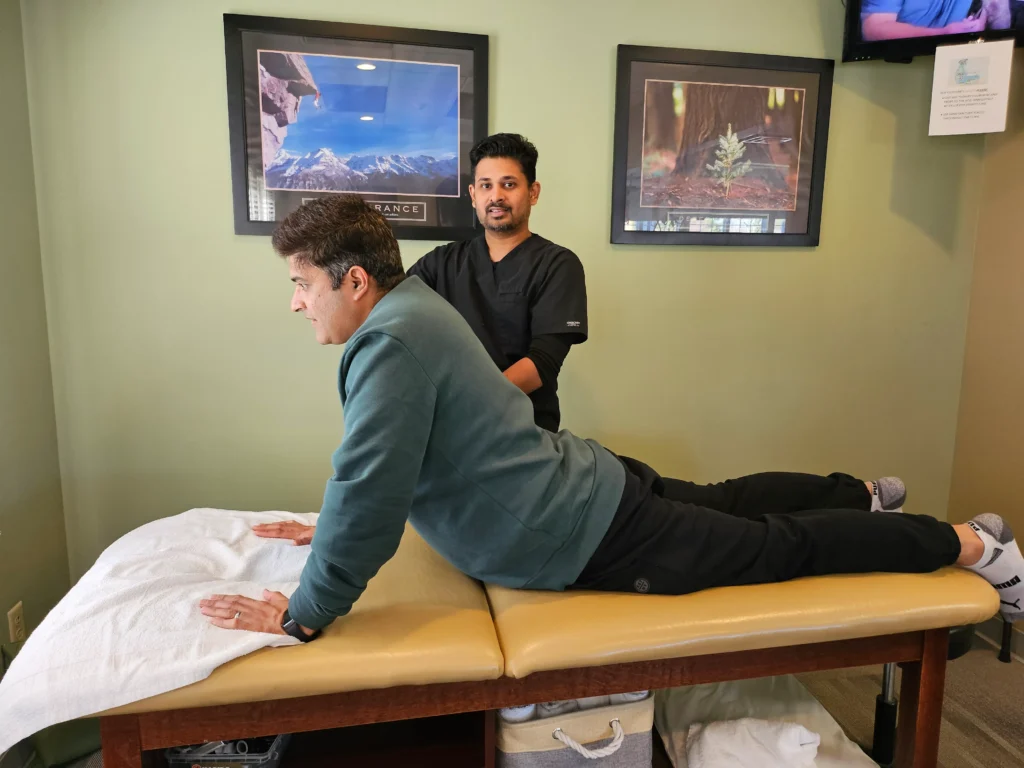
The Power of a Strong Core in Alleviating Sciatica
A strong core is not just about having “abs”; it includes muscles in your back, pelvis, hips, and even your buttocks. When these muscles are in tip-top shape, they help keep everything in the proper position and working correctly, minimizing the stress on the sciatic nerve and helping you feel less pain and more comfort.
Three Common Core Exercises
- Planks: This is a fundamental core exercise that works your abdomen and the muscles in your back and shoulders. Holding a plank position for several seconds engages multiple muscle groups, enhancing spinal stability.
- Bridge Exercise: Ideal for working your glutes, lower back, and hamstrings. By lying on your back with your feet flat on the floor and lifting your hips towards the ceiling, you strengthen the muscles that support your back.
- Dead Bug Exercise: This low-impact exercise engages the core without straining the lower back. Perform by lying on your back with arms extended upwards and knees bent above hips. Lower your right arm above your head while extending your left leg out, return to the starting position, and repeat.

Cherry-Berry Oatmeal Smoothies
- 1/2 cup quick-cooking rolled oats
- ½ cup light almond milk
- ¾ cup fresh strawberries
- ½ cup fresh dark sweet cherries
- 1-2 tbsp almond butter
- 1 tbsp honey
- ½ cup small ice cubes
In a medium bowl, combine water and oats. Microwave 1 minute. Stir in ¼ cup of the milk. Microwave 30 to 50 seconds more or until oats are very tender. Cool 5 minutes. In a blender combine oat mixture, the remaining ¼ cup milk, and the next four ingredients (through honey). Cover and blend until smooth, scraping container as needed. Add ice cubes; cover and blend until smooth. If desired, top each serving with additional fruit.